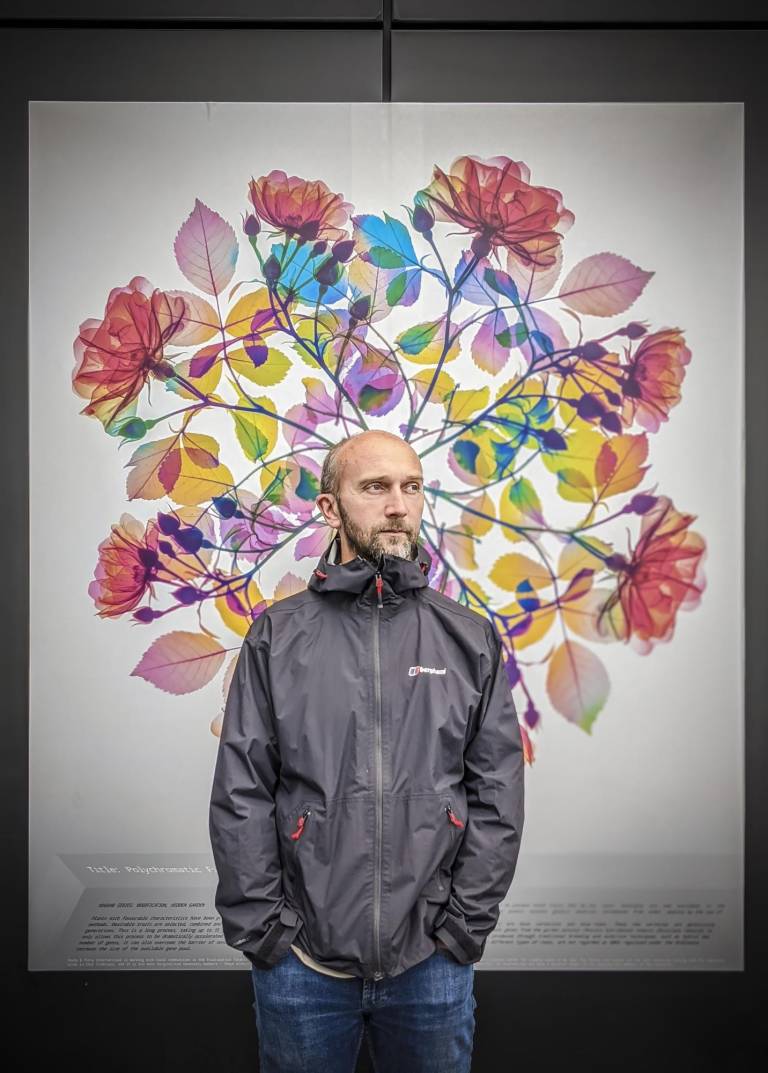
Biography

The Radiographic Aesthetic: A Comprehensive Biographic and Technical Analysis of Hugh Turvey’s Contribution to Contemporary X-Ray Art

The emergence of radiographic imaging as a legitimate medium within the contemporary fine art canon is inextricably linked to the work of Hugh Turvey. As a multidisciplinary artist, photographer, and experimentalist, Turvey has spent over two decades navigating the complex intersection of scientific diagnostic technology and aesthetic inquiry. His practice, characterized by the fusion of visible light and X-ray radiation, seeks to collapse the boundary between the internal and external realities of the material world. This report provides an exhaustive analysis of Turvey’s career, methodology, and institutional impact, specifically designed to facilitate a comprehensive expansion of his biographical record and Wikipedia presence.

Formative Context and Educational Trajectory

Hugh Robert Turvey was born on June 5, 1971, in Chippenham, Wiltshire, into a familial environment that, while not explicitly academic, fostered an early appreciation for visual complexity. His parents, Rodney and Patricia Turvey, observed his early inclination toward the creative industries, which was significantly nurtured by his aunt. Living in the Bahamas, she was an artist whose illustrative and graphic style featured overlapping figures, landscapes, and objects. Turvey frequently notes that eating meals under her large-scale canvases—which synthesized disparate elements into a "multiple reality"—unconsciously informed his later fascination with transparency and the layering of physical densities.

His formal education reflects a rigorous commitment to mastering both the conceptual and technical aspects of image-making. Between 1989 and 1994, Turvey transitioned through several key institutions, accumulating a diverse skillset in design, art direction, and professional photography.

Academic PeriodInstitutionSpecialized Focus
1989–1990Swindon Art CollegeFoundational Art and Design
1990–1992Royal Berkshire College of Art and DesignGraphic Design and Art Direction
1992–1994Blackpool and The Fylde CollegeProfessional Photography

During these formative years, Turvey was heavily influenced by the conceptual rigor of Russian Constructivism, particularly the work of Alexander Rodchenko, whose dynamic perspectives and emphasis on the "new eye" of the camera resonated with Turvey’s interest in seeing beyond the surface. Simultaneously, the scientific photographic studies of Dr. Harold E. Edgerton—renowned for his high-speed stroboscopic work—provided a technical template for capturing phenomena invisible to the naked eye. These early influences suggest a synthesis of political art history and scientific instrumentation that remains central to his current practice.

The Apprenticeship of the Gaze: Music to Medicine

Following his graduation in 1994, Turvey secured a prestigious four-year apprenticeship with Gered Mankowitz, a seminal figure in the history of British music photography. Mankowitz, known for his definitive portraits of Jimi Hendrix and the Rolling Stones, provided Turvey with a high-stakes environment where he worked on high-profile projects for artists such as Oasis and Phil Collins. This tenure was not merely an education in lighting and composition but also in the meticulous craft of chemical printing and archival management.

The pivotal shift from traditional music photography to radiography occurred in the late 1990s through a serendipitous commercial request. A designer colleague required a specific image of a broken bone for an album cover. Recognizing that traditional photographic methods could only mimic such an image, Turvey consulted the head of radiography at the Royal Free Hospital in Belsize Park. This encounter was transformative; Turvey was immediately captivated by the aesthetic properties of the 17 by 14-inch X-ray film sheets. He observed that while traditional photography relied on light rebounding off a surface, X-rays possessed a "light" that could penetrate the object entirely, revealing its internal architecture. This realization marked the beginning of his transition from a "rock-and-roll photographer" to an experimentalist dedicated to the radiographic aesthetic.

The Xogram: Technical and Ontological Innovation

The term "Xogram" is Turvey's signature contribution to the nomenclature of photography and radiography. Etymologically derived from "X" (representing the unknown and X-ray radiation), the Greek éxo (meaning outside or beyond), and gramma (signifying a drawing or written character), the term positions his work within a specific historical lineage. It acts as a contemporary evolution of the photogram—a technique popularized by William Fox Talbot and later Man Ray (Rayograms)—wherein objects are placed directly onto photosensitive material. However, where a standard photogram records only the exterior silhouette of an object, a Xogram captures both the exterior and interior densities, effectively rendering the subject transparent.

Radiographic Mechanics and Artistic Control

The creation of a Xogram is a technologically demanding process that involves managing the fundamental physics of radiation. Turvey operates within lead-lined or concrete bunkers, essential for safety when dealing with high-energy electromagnetic waves. The technical parameters of each exposure are governed by three primary variables: kilovoltage ($kV$), which determines the penetration power; milliamperes ($mA$), which controls the intensity of the beam; and time ($s$).

ModalityCreative ApplicationTypical Equipment
Analogue X-rayLarge-scale shadow photography on B/W film.Industrial/Medical X-ray Generators
MRI (Magnetic Resonance)Volumetric studies of soft tissue and organic structures.Clinical 3T MRI Scanners
CT (Computed Tomography)Cross-sectional and 3D reconstructions of complex objects.Multislice CT Scanners
Micro-CTHigh-resolution internal imaging of small specimens.Micro-tomography Units
FluoroscopyReal-time motion X-ray for moving mechanisms.C-arm Fluoroscopes

Turvey’s methodology frequently incorporates "happy accidents" and a range of non-standard techniques, including overexposure, multiple exposures on a single sheet of film, and the use of physical filters and custom-built rigs. After the exposure is made on analogue film—a process that requires about eight minutes per sheet for development—the resulting image is a high-contrast, grayscale shadowgraph.

The 1:1 Scale and the Mosaicking Process

A significant technical constraint of radiographic art is the absence of lenses, which prevents the magnification or reduction of the subject during the initial exposure. The X-ray source essentially casts a parallel beam, resulting in a 1:1 scale representation. For large subjects, such as his celebrated X-ray of a motorcycle or an elephant skull, Turvey must utilize a complex "mosaicking" technique.

The motorcycle X-ray, for example, required approximately 50 separate sheets of film, each exposed sequentially with varying parameters to account for the differing densities of metal, rubber, and glass. These sheets were then digitized via high-resolution photographic scanners and painstakingly stitched together in a digital environment. This process, which can take several months to complete, results in a final digital file of immense resolution, often exceeding one gigabyte in size.

Post-Processing and the "Visual Path"

Turvey estimates that post-production accounts for at least 70 percent of the labor involved in creating a final work. Because the raw X-ray is a flat, monochromatic shadow, he utilizes digital colorization to reintroduce depth and complexity. His use of color is not decorative but strategic; it serves to control the "viewer's eye path" through the image, highlighting specific structural features and establishing a sense of three-dimensional space within a two-dimensional medium. This fusion of digital color and analogue shadow creates the distinctive "X-ray photographic aesthetic" for which he is internationally recognized.

Institutional Leadership and the British Institute of Radiology

Turvey's professional status is defined by his long-term affiliation with the British Institute of Radiology (BIR), the international organization for professionals in medical imaging and radiation oncology. In 2009, following a solo exhibition at the Oxo Gallery in London, Turvey was appointed the BIR’s first Artist in Residence—a position that has been renewed for over 15 years.

This residency is not merely an honorary title but a functional role within the institute’s outreach program. Turvey acts as an "advocate for X-ray," promoting the aesthetic and educational value of the technology to the public. His presence within the BIR has granted him unprecedented access to state-of-the-art diagnostic equipment and the expertise of medical physicists and radiographers. This collaboration has enabled him to move beyond standard radiography into more complex modalities, including MRI, CT, and Micro-CT.

Professional Recognition and Fellowships

The impact of his work on the intersection of art and science is reflected in the numerous fellowships and honors he has received from prestigious scientific and photographic bodies.

YearHonor/AppointmentOrganizationSignificance
2009Artist in ResidenceBritish Institute of RadiologyFirst appointment in the organization's history.
2014Honorary Fellowship (HonFRPS)Royal Photographic SocietyAwarded for promoting the "art of science."
2016Fellowship (FRSA)Royal Society for ArtsFor impact on healthcare patient experience.
2019Crookshank LectureRoyal College of RadiologistsPrestigious annual endowed lecture invitation.
2022Chair of Science CommitteeRoyal Photographic SocietyLeadership in the advancement of scientific imaging.

In 2019, his delivery of the Crookshank Lecture (endowed by the late Right Honourable Viscount Crookshank CH) marked a significant moment of integration between the artistic and medical communities. In 2022, his appointment as Chair of the Royal Photographic Society Science Committee further solidified his role as a leader in the governance and promotion of scientific photography.

Art as Therapeutic Intervention: Healthcare and Patient Experience

A core pillar of Turvey’s mature practice is his dedication to improving healthcare environments. Operating as a creative consultant, he explores how "immersive arts experiences" can mitigate patient stress and improve the overall atmosphere of clinical settings. His work in this sector aims to "demystify" the process of X-ray imaging, transforming the technology from a source of clinical anxiety into one of visual curiosity.

Hospital Installations and Interior Design

Turvey has successfully implemented large-scale art installations in hospitals across the UK, Germany, and the United States. These projects often utilize his floral and nautical Xogram series as key motifs, integrated directly into the architectural fabric of radiotherapy and X-ray departments.

  • University College Hospital (UCH), London: One of his most significant early healthcare projects involved a collaboration with the Department of Specialist Imaging. He created a series of artworks derived from multi-sequence MRI scans of the prostate—technology typically used to detect small foci of cancer. By aestheticizing these diagnostic images, Turvey sought to engage patients with the beauty of the science used in their treatment.

  • Benenden Hospital, Kent: This long-term project (spanning over a decade) involved the installation of large X-ray wall murals in a new-build hospital environment. In 2018, the project was recognized as the winner of the "Staff & Patient Experience Class" and "Best Internal Environment" at the Building Better Healthcare Awards.

  • Robert White Centre, Dorset County Hospital: Turvey designed interior wall spaces for the radiotherapy department, utilizing his Xograms to reduce the sense of clinical sterility and provide a calming visual focus for patients during treatment.

  • Massachusetts General Hospital, Boston: His international work includes commissions for one of the world's leading medical institutions, demonstrating the global relevance of his therapeutic aesthetic.

The "Remembering Baby" Exhibition and Societal Impact

Between 2015 and 2018, Turvey collaborated on a groundbreaking project funded by the Economic and Social Research Council (ESRC) entitled "Remembering Baby: Life, Loss and Post-mortem". Led by Professor Kate Reed and a team of researchers from the University of Sheffield, the project investigated the role of MRI in the post-mortem process for baby loss—a traditionally taboo subject.

Turvey served as the lead artist and a member of the steering committee, curating a series of touring exhibitions and workshops. The exhibition featured memory boxes, sound installations, and X-ray-based artwork that allowed bereaved parents to engage with their loss in a public space. One of the key interventions was the creation of "paper impressions" of memory items, such as knitted hats or ultrasound images, which helped families navigate the grieving process. The project was awarded the ESRC Outstanding Societal Impact Prize in 2019, reflecting the profound role Turvey’s art played in challenging social silences and changing professional practice in NHS Foundation Trusts.

Commercial Convergence: Branding and Industrial Craft

Turvey's ability to reveal the "hidden poetry" of objects has led to an extensive portfolio of commercial collaborations with global luxury and consumer brands. These projects often use radiography to emphasize the material integrity and complex engineering of high-end products.

Luxury Fashion and Cosmetics

The fashion industry has been a frequent collaborator, utilizing X-rays to showcase the "behind the seams" reality of designer products.

  • Chanel (Le Lift): In 2019, Turvey collaborated with Chanel’s creative team on the global "Le Lift" campaign. He provided X-ray botanical stills and animations (such as the tuberose) that highlighted the internal structure of the plants used in their formulations.

  • DITA Eyewear: In 2019, Turvey was commissioned to X-ray a range of DITA frames, revealing the intricate internal screws, hinges, and structural reinforcements that define the brand's craftsmanship.

  • Kenzo Parfums: For the packaging and marketing of their fragrances, Turvey produced X-rays of ingredients such as fresh ginger slices, emphasizing the organic purity of the components.

  • LVMH and L'Oréal: His work has been utilized in various capacities for these conglomerates, bridging the gap between scientific efficacy and luxury branding.

Automotive and Footwear Engineering

  • Joe Nimble (BÄR GmbH): An ongoing partnership with the German shoe brand (2021–2024) has resulted in detailed X-rays of running shoes and skeletal animations of feet in motion. These images are used to visually communicate the brand's focus on ergonomic toe-box design and foot health.

  • Brough Superior and Robert White: In 2018, Turvey created a monumental X-ray of a 1928 Brough Superior SS100 motorcycle to honor the legacy of Robert White. The image, which reveals every gear, piston, and cable of the vintage machine, is now on permanent display at Poole Dorset County Hospital.

  • Ford Motor Company: Turvey produced six award-winning TV advertisements for Ford using "Motion X-Ray" (fluoroscopy), allowing viewers to see the internal mechanical operations of the vehicle as it functioned.

ClientProject ScopeDate
ChanelBotanical X-ray for Le Lift SkincareDec 2019
DITACraftsmanship series for luxury eyewearJuly 2019
WaitrosePackaging for Heston Blumenthal range2010–2013
Kraft HeinzBBQ sauce structural density imaging2019–2023
Tapestry (Coach)Handbag animations for large-scale installsMay 2023
Joe NimbleX-ray running shoes (Addict Pro-R)April 2024
ASOSX-ray of Topshop/Topman sneakersAug 2022

Digital Frontiers and Interactive Education

Turvey’s work has successfully navigated the transition from static analogue film to dynamic digital media. This is most evident in his award-winning collaboration with TouchPress on the "X is for X-Ray" iPad app.

The "X is for X-Ray" Interactive Ecosystem

Launched in 2012, the "X is for X-Ray" app—accompanied by an eBook and published in association with the American Society of Radiologic Technologists—provides an A-to-Z exploration of everyday objects through radiography. The app features 26 meticulously X-rayed items, including car engines, insects, and robotic dogs. Users can:

  • Rotate 360 Degrees: Many objects can be swiped to rotate, revealing their internal structure from every angle.

  • Transition Modalities: A vertical swipe allows users to "see through" the visible surface into the X-ray view.

  • Stereoscopic 3D: Double-tapping an image enables a stereoscopic view that can be experienced with 3D glasses or through "free-viewing".

  • Educational Narratives: The app includes poems and expressive narration that explain the science of radiation in an "easily digestible format" for children.

Critically, the app was praised for its "attention to detail," such as the animation of a car engine’s pistons turning in X-ray mode, and was hailed as "the learning bomb" for curious children.

Cinematic and Television Contributions

Beyond commercial advertising, Turvey’s work has informed the visual language of feature cinema. In 2011, he produced the X-ray imagery for the Jennifer Devoldère-directed film Et Soudain, Tout Le Monde Me Manque (The Day I Saw Your Heart). The film's protagonist is an artist, and the final scene—an X-ray exhibition—was shot at the Galerie Anne de Villepoix in Paris, with Turvey making a cameo as a gallery visitor. His work has also been featured in documentaries and interviews on BBC Persia and France 5, further extending his reach into global media.

Critical Reception and Artistic Philosophy

Turvey characterizes himself as an "experimentalist who thinks in images," maintaining a sense of constant discovery despite 25 years in the field. His work is frequently compared to the avant-garde experiments of the early 20th century, specifically the lineage of "shadow photography". However, where his predecessors were limited by the surface opacity of light, Turvey utilizes the transparency of radiation to offer an "antidote to popular culture’s obsession with the superficial".

Iconography of the "Femme Fatale"

One of his most enduring and iconic works is "Femme Fatale," a colored X-ray image of a woman's foot (his wife's) inside a high-heeled stiletto shoe. The image has achieved iconic status, described as "transparent" and "self-explanatory". It serves as a stark radiographic portrait of the structural stress placed on the human skeleton by fashion—a theme that resonated with Vogue Italia, which featured his work in its October 2020 issue.

Public and Private Collections

His Xograms are held in numerous public and private collections worldwide, bridging the gap between art and science museums. Permanent installations include:

  • Sir Isaac’s Loft, Franklin Institute Science Museum, Philadelphia: Displays his work as an educational tool for understanding physics.

  • The Roentgen Museum, Germany: Exhibited in the birthplace of Wilhelm Conrad Röntgen, the discoverer of X-rays.

  • The Science Photo Library: Turvey has developed an extensive body of work specifically for this repository, ensuring his images are used globally for educational and editorial purposes.

Strategic Roadmap for Wikipedia Expansion

The current Wikipedia entry for Hugh Turvey is functionally adequate but requires significant source-backed expansion to reflect his career post-2014 and his technical innovations. The following table identifies specific areas for improvement based on available research material.

Page SectionCurrent StateProposed Source-Backed Expansion
Lead ParagraphFocuses on BIR appointment and 2014 RPS Fellowship.

Integrate his role as Chair of the RPS Science Committee (2022) and the Crookshank Lecture (2019).

Early Life/InfluenceMentions Rodchenko and Edgerton.

Add the influence of his aunt in the Bahamas and the concept of "multiple reality" in her work.

TechniqueBrief mention of "Xograms."

Create a dedicated "Xogram" subsection detailing the physics of $kV$ and $mA$, the 1:1 scale constraint, and the mosaicking of large subjects like the motorcycle.

HealthcareFragmented hospital mentions.

Create a "Healthcare and Patient Experience" section. Include the UCH prostate MRI project and the Building Better Healthcare Award (2018).

Remembering BabyNot currently present.

Add a section on this ESRC-funded project, detailing the impact on bereavement care and the 2019 Impact Prize.

Commercial WorkFocuses on Waitrose/Heston.

Expand to include Chanel (Le Lift), DITA Eyewear, Joe Nimble, and the 2022 ASOS Topshop campaign.

Digital/CinemaMentions 2011 film and iPad app.

Update with the 2016 Android Wear watchface commission and the "Our House" Lidar project (2022).

Critical Citation Updates

The Wikipedia page currently relies on several broken or archived links (Refs 1, 16, 17, 18). These should be replaced with live, high-authority secondary sources:

  1. National Geographic (2014) for his technical philosophy and the elephant skull project.

  2. British Institute of Radiology (2022/2026) for his ongoing residency and webinars.

  3. University of Sheffield Research Portal for the "Remembering Baby" societal impact.

  4. Royal Photographic Society Awards (2014/2023) for fellowship and judging panel details.

Future Directions: From Shadow to Volume

As technology evolves, Turvey has increasingly moved into the realm of volumetric imaging. His recent work incorporates 3D data from MRI and CT scans, which he reconstructs into "volumetric animations". Projects like "IKEBANA," where space is shaped as "invisible energy," suggest a future where radiography is used to visualize not just the interior of objects, but the invisible forces between them.

Furthermore, his 2022–2025 collaboration with the Lost Gardens of Heligan and his work with Lidar (Light Detection and Ranging) in the "Our House" project indicate an expansion into ecological and spatial documentation. These new modalities demonstrate that while Turvey remains rooted in the "shadow photography" of the X-ray, his practice is increasingly defined by a broader interest in the "unseen poetry" of all scientific imaging.

Conclusion: The Institutional and Aesthetic Legacy of Hugh Turvey

The career of Hugh Turvey represents a rare successful synthesis of high-level scientific cooperation and uncompromising artistic vision. Through the creation of the Xogram, he has provided a visual language that demystifies the clinical gaze and reveals the structural elegance of the material world. His long-standing residency at the British Institute of Radiology and his leadership in the Royal Photographic Society establish him as a foundational figure in the "art of science."

The exhaustive evidence provided in this report confirms that a comprehensive revision of his public record is not only justified but necessary to reflect the breadth of his contributions to healthcare, commercial branding, and the digital arts. By humanizing technology and aestheticizing diagnosis, Turvey continues to challenge the limits of human perception, proving that transparency is a profound tool for understanding both the objects we create and the bodies we inhabit.


Hugh Turvey trained as a designer / art director but on discovering photography he retrained under iconic photographer Gered Mankowitz. During 1996/1997 he started experimenting with x-ray/shadow photography after being asked to create an alternative ‘revealing’ image for an album cover. With the encouragement of the Science Photo Library he went on to produce an extensive series of coloured x-rays of everyday objects, which were first published on the 4 April 1999 in The Observer Magazine, LIFE, UK. In the same year Credit Suisse discovered Hughs' x-ray vision and commissioned 6 ground breaking ‘motion x-ray’ European TV commercials.


Origination:
a. Hugh Robert Turvey
b. Born 5/6/71 in Chippenham Wilts – West Country between Bath and Swindon. First Son of three children born to Patrica and Rod Turvey.


Heritage:
c. Patrica Turvey trained at the Bedford College Of Physical Education 1964-67. 1 year teaching at Overstone School Nr Northampton as Head of PE Dept. 2 Years St Christophers School Beckenham, Kent. 1970-77 Kington St Michael, Wilts and had 3 children. 1989-92 returned to teaching Royal School, Bath. 1992-99 part-time Sport Science Lecturer at Chippenham Technical College.
d. Patrica Turvey from 1969-79 played International Level Lacrose for Wales (WWLA)

 
e. Rodney Turvey 1963-68 Electronic and Electrical Engineering at City University, St. Johns St., London ( sandwich with working at Plessy, Ilford)2:2. 1969-80 Westinghouse, Chippenham, Wilts as Engineering Assistant-Export Sales Manager. 1981 Logica, Newman Street, London – salesman. 1983 Logica, Aberdeen – Section Manager. 1985 Logica, Henrietta House, London. 1987 Dowty Information Systems, Marshfield, Avon – System Director. 1988-92 Dowty – Managing Director. 1992 management buyout, Dowty becomes Dopra Systems Integrated – MD ( Note: Considers himself a Innovator and Business Developer – a problem solver )


f. 1994 Patrica and Rodney partner up and purchase Zapp Canopy Umbrellas, Stapleton Road, Bristol a small manufacturing company. 1999 Move to new premises in Westinghouse, Chippenham as Zapp Canopy Umbrellas Ltd. 2003 employing 6 permanent, 2 part-time and one agent in the Midlands.


Education:
93 - 94 University of Central Lancashire, Preston ( Blackpool Annex )

Ba ( Hons ) Photography ( 2:1) + B.I.P.P. PQE ( Merited )


92 -93 Blackpool And The Fylde College, Lancashire
Higher National Diploma in Photography


90 -92 Royal Berkshire College Of Art And Design, Reading
Higher National Diploma in Graphic Design and Advertising


89 - 90 Swindon Art College, Wiltshire
National Diploma Foundation In Art and Design Studies


85 - 89 Monmouth School, Gwent, Wales
3 A'Levels Fine Art, English Literature, Pure and Applied Maths
2 A/S'Levels Personal and Business Finance and General Studies
9 O'Levels English Literature, English Language, History, Geography, Biology, Chemistry, Physics, Mathematics, Art